

Key Highlights
- Play-based learning is the primary pedagogical tool for cognitive and social development in young children.
- A structured daily routine provides children with a sense of security, predictability, and emotional stability.
- Consistency in early years education fosters independence, confidence, and a lifelong love of discovery.
- Daily activities integrate sensory exploration, physical movement, and social interaction to support holistic growth.
Introduction
The early years of a child’s life represent a critical window for development. During this period, the brain is remarkably receptive, and the experiences children have form the foundational architecture for their future learning. Many parents often wonder what their little ones are actually doing during their hours at school. While it may look like simple play, the reality is far more sophisticated. At a high-quality nursery at Simei, we recognise that play is the work of the child. It is the primary vehicle through which they investigate the world, test theories, build social connections, and develop the cognitive skills necessary for later academic success.
The Role of Routine in Early Childhood
Routine acts as the backbone of a successful early learning environment. For a young child, the world can sometimes feel overwhelming or unpredictable. A consistent daily rhythm provides a sense of safety and security, allowing children to focus their energy on learning rather than navigating uncertainty. When a child knows what comes next, they feel more confident to explore, take risks, and express themselves. This structure is a fundamental component of the childcare at Simei provided by KidsCampus, where we balance predictability with flexibility to meet the evolving needs of every student.
A Typical Day in Our Learning Environment
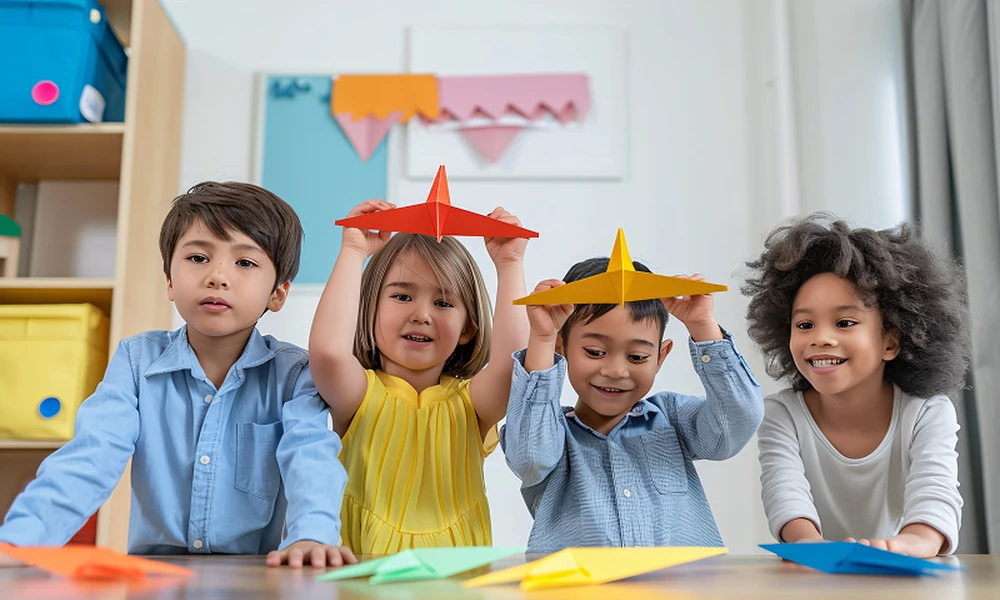
The day begins with arrival and settling, a crucial time for emotional transition. Teachers greet children with warmth, helping them detach from caregivers and connect with their peers. This ritual is essential for building trust. Following this, the morning often starts with a circle time. This is a gathering where children sing songs, share stories, and discuss the day ahead. It serves as a gentle introduction to group dynamics and language development.
Once the initial morning interactions are complete, the children move into blocks of intentional, play-based exploration. This is where the magic of the curriculum comes alive. In our classrooms, children might engage in sensory-based activities, art projects, or cooperative problem-solving tasks. The environment is carefully curated to provoke curiosity, with materials organised in such a way that children can make choices about their own learning path.
Balancing Active and Quiet Periods
Physical development is just as important as cognitive growth. Outdoor play or active movement sessions are scheduled to allow children to use their gross motor skills. Whether they are climbing, running, or navigating obstacles, these activities help children develop balance, coordination, and physical confidence. Following this, children often transition into a quieter phase, such as lunch or rest time. These moments are not just about meeting physical needs but are also opportunities for social learning. During meals, children practice manners, engage in conversation with friends, and learn to recognise their own hunger and satiety cues.
Why Consistent Early Learning Matters
The beauty of a well-designed routine is that it allows for spontaneity within a secure framework. If a project in the art corner captures the children’s imaginations, the programme allows for that engagement to deepen. However, the underlying rhythm-the transitions, the breaks, the group times-remains constant. This balance is what makes a nursery at Simei effective. It respects the child’s need for autonomy while providing the boundaries they need to thrive.
As parents search for the right childcare at Simei, it is vital to look for a programme that understands the intersection of play and structure. At KidsCampus, we believe that when children feel safe, seen, and supported, their potential for growth is limitless. By integrating purposeful play into every hour of the day, we ensure that our students are not just spending their time, but investing it in the development of their future selves.
Conclusion
Choosing the right environment for your child is a significant decision. The daily routine of an early learning centre is more than just a schedule; it is the living expression of the centre’s educational philosophy. Through carefully planned, play-based activities, we nurture curiosity, foster independence, and build the confidence children need to navigate the world.
Contact KidsCampus today to learn more about our programmes and how we support your child’s unique learning journey. Our team is ready to assist you in finding the best start for your little one.


The Basic Types of Communication Training for An Organization
